GoHighLevel Glossary: The Complete Guide to Key GHL Terms

GoHighLevel has specific terms for features and functions. This glossary provides definitions for 35 key terms across a range of categories, from account management to automation to technical integrations. Use this guide as a reference when you come across new terms when developing or administering your GHL implementation.
How Do Core GoHighLevel Terms Fit Together?
Sub-accounts create individual client workspaces inside GoHighLevel. Workflows automate actions that run inside those accounts. Snapshots duplicate sub-account configurations so you do not start from zero. These three features are how you build, organize, and scale.
Core Glossary Terms
GoHighLevel throws a lot of terminology at you when you are building. This glossary breaks down 35 core terms you will actually use, organized by category so you can find what you need without wading through everything else.
Account & Workspace Management
1. Sub-Account (Client Workspace)
An isolated workspace for a single client or business. Build their CRM, funnels, pipelines, calendars, and automations, and everything stays separate; no data leaks between accounts. Create one sub-account per client you manage.

2. Agency View vs. Sub-Account View
3. Snapshot (Reusable Setup Template)
Export a complete sub-account setup
Import it into new accounts instantly. Cuts setup time from weeks to minutes. Copies structure only; a new account has zero existing contacts.

4. SaaS Mode (Resell GHL Under Your Brand)
Package GHL and sell it to clients as your software. Your branding, your pricing ($197/month charged to them; you pay GHL $97 and keep $100). Only works if you have sales and support infrastructure.

5. White Label (Your Branding Everywhere)
Every UI element shows your logo, colors, and domain. Clients see your company name in the app, not LeadConnector. Usually paired with SaaS Mode.

Contact & Data Organization
6. CRM (Contact Database)
Your contact records live here. Phone, email, notes, conversation history, appointments, pipeline stage, and everything is linked to one contact. Everything else feeds data back into the GHL CRM. You can’t operate without it.
7. Tag (Contact Label)
Apply labels to contacts: “hot lead,” “customer,” “requested demo.” Create tags to activate workflows, filter lists, and bulk-action groups.
8. Smart List (Auto-Updating Contact Filter)
A view that is updated dynamically.
For example: “Contacts tagged ‘customer’ that have not been active for 30 days. Take the tag away, and they go away. Manual lists are static; Smart Lists adapt.

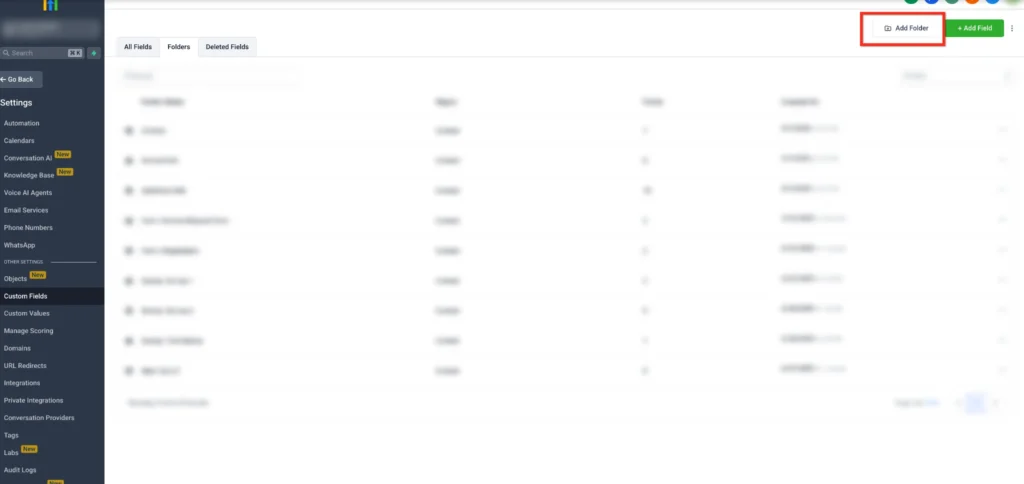
9. Custom Field (Extra Data on Contact Records)
Store data beyond defaults (name, email, phone). A therapist tracks “Primary Diagnosis” and “Insurance Type.”
A coach tracks “Niche” and “Budget.” Fields appear on contact records and forms.
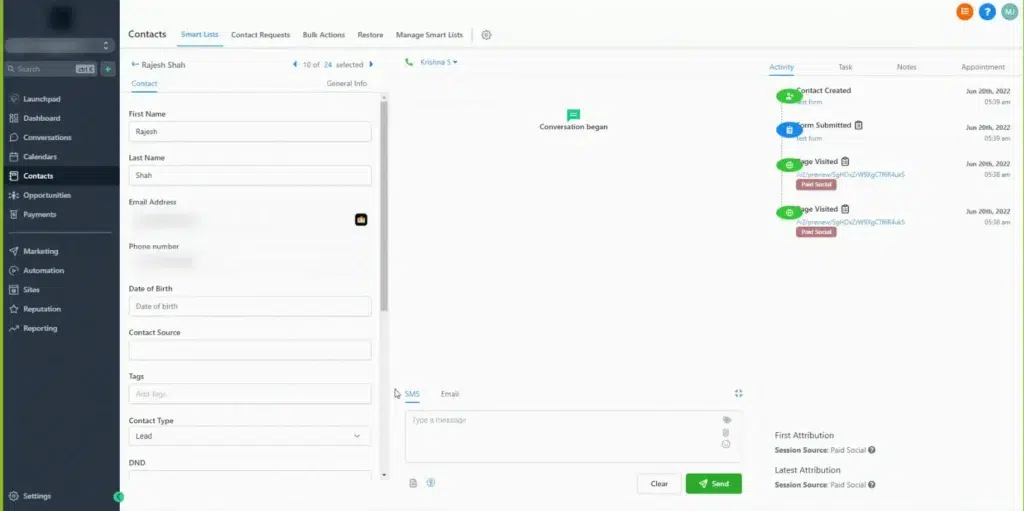
10. Contact Source (Where Leads Originated)
Track lead channels: “Form Submission,” “Facebook Ad,” “Manual Entry,” and “Website Chat.” Know which channels convert.
Sales & Pipeline
11. Pipeline (Kanban Board for Deals)
The pipeline and opportunity tracking system’s visual board showing sales stages:
New Lead > Contacted > Proposal Sent > Closed Won. Move opportunities as they progress. Create custom stages based on your sales process.

12. Opportunity (One Deal in Your Pipeline)
A single sale possibility tied to a contact. Track value, stage, and closing probability. One contact can have multiple opportunities.
13. Funnel (Multi-Step Sales Page Sequence)
A series of pages designed to push one action: sign up, buy, book a call, download.
Built-in funnel builder with drag-and-drop.

14. Funnel Step (One Page in a Funnel)
Each page in the funnel sequence setup. Could be a lead magnet form, sales page, or confirmation page.
15. Invoice and Payments (Billing Inside GHL)

Automation & Workflows
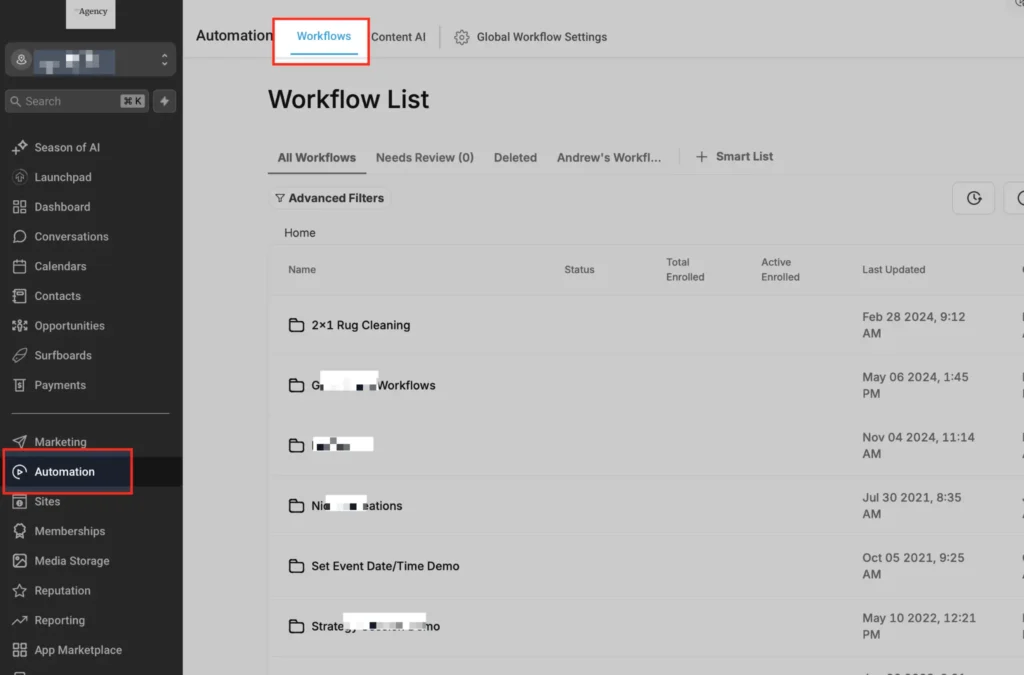
16. Workflow (Visual Automation)
In workflow automation: Trigger > actions (tagging, SMS, task creation) > 3-day wait > follow-up process based on feedback. If yes, advance pipeline; if no, follow up.
Tips
Start with one trigger and two or three actions, then expand the workflow as you validate and optimize its performance.
17. Automation (Umbrella Term)
Any action that executes without manual input.
Use workflows; they are the modern approach.
18. Trigger Link (Click-Activates Workflow)
Special URL that fires a workflow when clicked.
19. Message Templates (Reusable Communication)
Save email or SMS templates. Write once, reuse 100 times.

20. Merge Fields (Dynamic Placeholders)
Auto-populate contact data. Email to 100 leads, each seeing their name:
21. Custom Values (Global Variables)
Central variables used everywhere. Create “CompanyName” = “Zenith Agency.” Change it once; updates everywhere.
Communication & Engagement
22. Conversation Inbox (Unified Messages)
All SMS, email, Facebook Messenger, Instagram DMs, and chat widget messages land in one inbox. Assign conversations to the team, reply, and see history.
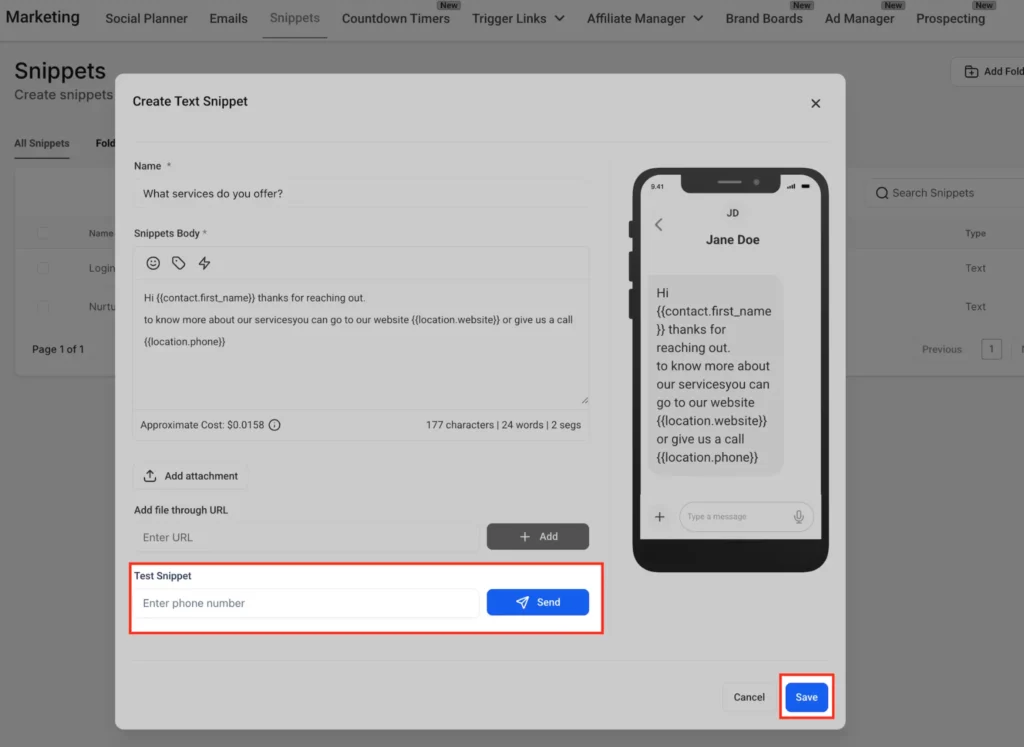
23. LC Phone and LC SMS (Native GHL Communication)
24. Calendar and Booking (Appointment Scheduling)
25. Reputation Management (Review Automation)
Auto-request reviews after appointments. Customers get an SMS or email asking for Google/Facebook reviews. Display reviews on your site. Manage replies in-platform. Most businesses see 3x more reviews in month one.
26. Form (Lead Capture Widget)
Web widget that collects data and creates contacts.
Build in the form builder or embed on external pages.
Technical & Integration
27. Webhook (Data Bridge)
Send data from GHL to other platforms when events happen. Contact creates > webhook fires > data lands in Zapier > Zapier adds to Google Sheets. Connects systems that do not have built-in integration.
28. API (Custom Integration Doorway)
Technical interface for developers. Build custom integrations, pull/push data, and automate between GHL and any system. Most agency users don’t touch this.
29. Domain Mapping (Your Domain)
Map your domain (youragency.com) to GHL sites or funnels. Instead of a GHL.app subdomain, visitors see your domain. Essential for white-labeling. Requires DNS configuration.
30. GHL Marketplace (Pre-Built Templates)
Browse and install pre-built snapshots, integrations, and apps. Browse by industry. One-click install. Free and paid options.
31. Eliza / Conversation AI (Chatbot)
AI chatbot for your website. Answers common questions and escalates to humans if needed. Monthly subscription. Reduces support load.
Compliance & Setup
32. A2P 10DLC (SMS Registration)
US SMS compliance registration. Register your business and verify your phone number. Without it, carriers block bulk SMS. Needed at scale.
33. Rebill / Usage-Based Billing
Auto-charge clients for platform usage. Send 1000 SMS > charge for SMS. Book 10 calls > charge per call. Auto-invoicing monthly.
Quick Reference Table
| Build multiple client workspaces | Sub-Accounts |
| Reuse setups across clients | Snapshots |
| Automate actions | Workflows |
| Organize contacts | Tags, Smart Lists, Custom Fields |
| Collect leads | Forms |
| Build sales pages | Funnels |
| Accept payments | Invoices, Payments |
| Message clients | Conversations, LC Phone, LC SMS |
| Brand as your own | White Label, Domain Mapping, SaaS Mode |
| Send bulk SMS safely | A2P 10DLC |
| Scale billing | Rebill, Usage-Based Billing |
| Connect to external apps | Webhooks, API |
Conclusion
This glossary covers the terms that matter most. Sub-accounts organize clients. Snapshots speed up setup. Workflows automate everything. Funnels capture leads. Pipelines track deals. The CRM holds everything.
Bookmark this page and reference it while building. The terminology won’t confuse you once you’ve used these features in real accounts.
Most agencies see faster implementation just by understanding these core terms clearly. Start here, build from here.